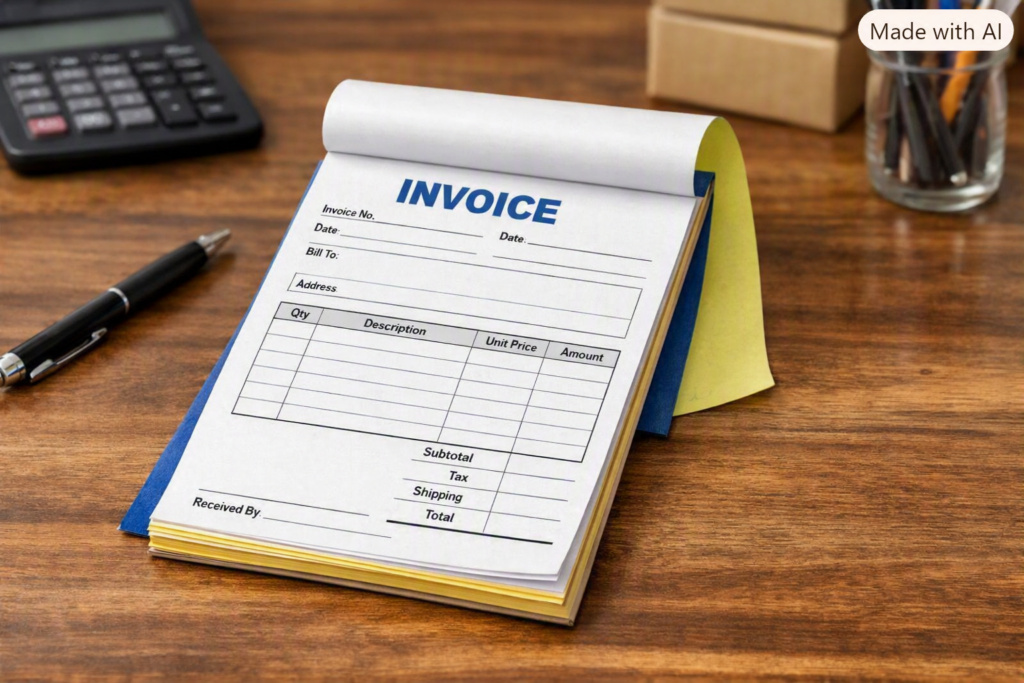
“Do I need to issue an invoice for a ₱120 sale?” It is the question we hear most across the counter, and the answer depends on one thing first: whether you are VAT-registered.
If you are VAT-registered
Issue a duly registered VAT Invoice for every sale transaction, regardless of the amount. There is no floor. A ₱20 sale gets an invoice.
If you are Non-VAT registered
You must issue a registered Non-VAT Invoice when the sale is ₱500 or more. The Ease of Paying Taxes Act raised this floor from the old ₱100, and the amount is adjusted to present value every three years using the Consumer Price Index — so treat ₱500 as the current figure, not a permanent one, and check it before you print a policy on your wall.
Three cases where the amount does not matter
- The buyer asks for one. If a customer requests an invoice, you issue it — ₱20 or ₱20,000. No discretion here.
- Your small sales add up. If your individual sales are below the threshold but the day’s total reaches it, you issue one invoice for the aggregate amount at the end of the day.
- You are VAT-registered. As above — every transaction, always.
Read those together and the practical conclusion for most retailers is simple: you will be issuing invoices most days regardless, so plan your form supply as if the threshold were not there.
What this means for how much you print
Most businesses order too few booklets and reorder in a panic. A rough way to size a run:
- Count the invoiceable transactions you had last month — including the daily-aggregate invoices, not just the large sales.
- Multiply by the number of months you want the run to cover. Six to twelve months is usual.
- Add a margin for spoilage and cancelled sets.
- Check the result against the quantity on your approved Authority to Print — you cannot print beyond what the ATP covers.
Then work backwards from your deadline. An ATP application takes time at the RDO, proofing takes a day or two, and printing and binding a numbered run is not an afternoon job. Businesses that start when the last booklet is opened are the ones that end up issuing the wrong document — which, as we covered in our note on invoices and official receipts, is treated as issuing nothing at all.
A checklist before you order
- Confirm your VAT status on your Certificate of Registration.
- Decide the invoice type: VAT Invoice or Non-VAT Invoice.
- Confirm the number of plies you need — the customer’s copy, your file copy, and any copy your bookkeeper or branch requires.
- Confirm the serial range that continues from your current booklets.
- Get the ATP in hand, or ask us to prepare the application with you.
Where we come in
We are a BIR-accredited printing establishment specialising in accountable forms. We print registered VAT and Non-VAT invoices in two, three and four plies, serialised and bound, and we handle the Authority to Print process alongside you.
Use the estimate tool on this site for an indicative figure, or ask our assistant what your ATP application will require.
This note is general information on printing and documentary requirements, not tax advice. Thresholds are adjusted periodically — please confirm your specific situation with your accountant or the BIR.
Next step
Need this printed, or an ATP prepared?
Get an indicative estimate in a minute, or ask us your compliance question directly.
Read next